

Conversational AI
AI-to-Human Handoff: The Escalation Guide
Najoomi Press
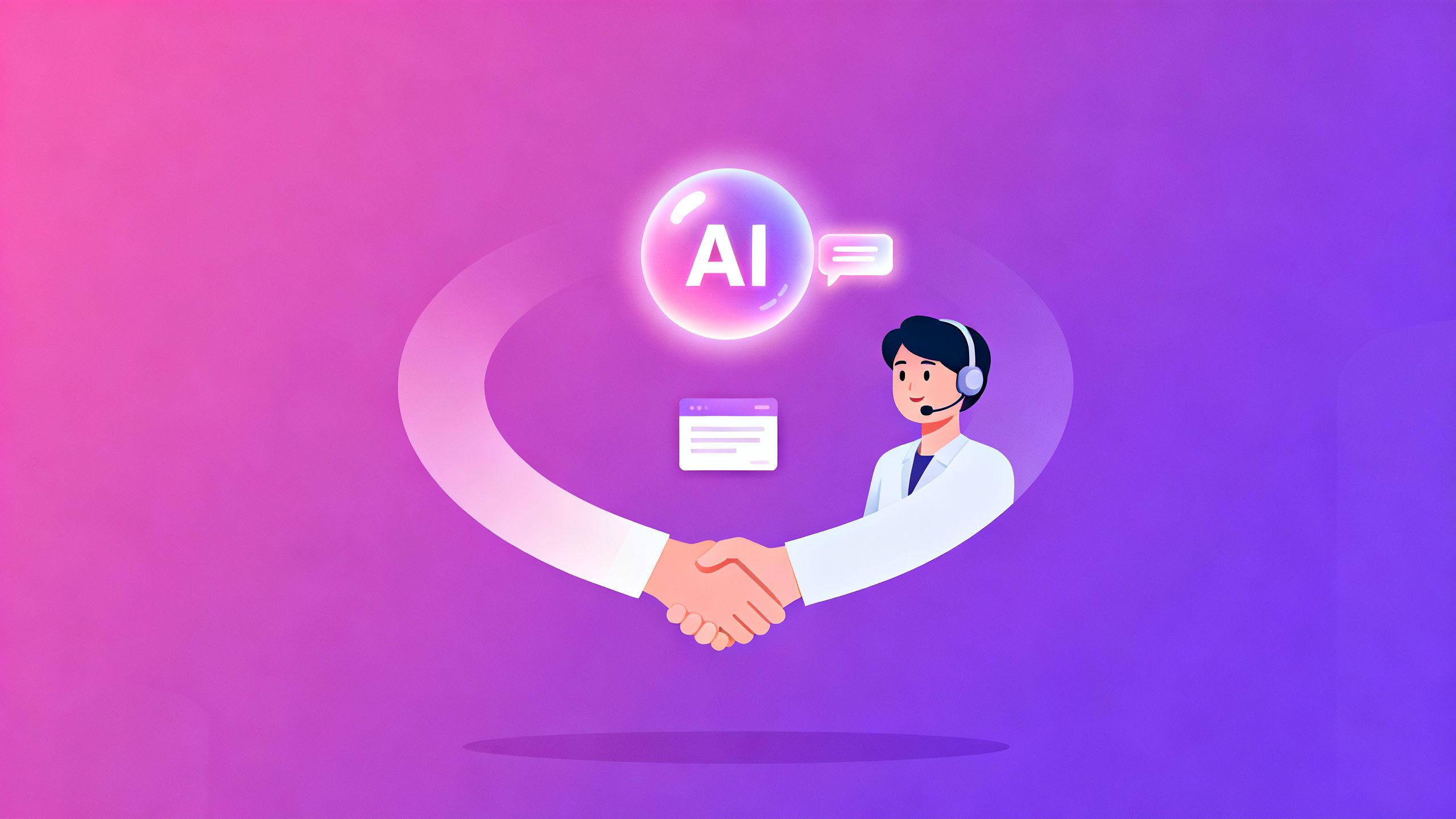
Every AI support system eventually reaches a moment it shouldn't handle alone — a frustrated customer, a sensitive account, an edge case no automation should guess at. What happens in that moment defines the entire experience. A clumsy handoff — "please hold while I transfer you" followed by a blank agent asking you to explain everything again — undoes all the goodwill the AI earned. A great one feels like the conversation simply continued, now with a person.
The AI-to-human handoff is the single most important design decision in AI customer service automation. With 80% of companies now using AI in their support operations, the difference between AI that customers trust and AI they resent usually comes down to how gracefully it escalates. This guide breaks down when to hand off, what a great handoff looks like, and how to design escalation that makes both customers and agents better off.
AI can resolve a huge share of requests on its own — but customers don't trust automation because it never needs a human. They trust it because when a human is needed, getting one is easy, fast, and painless. The handoff is where automation proves it's on the customer's side, not standing between them and help. Get it right and the AI becomes a welcome front line. Get it wrong and every unresolved conversation becomes a reason to distrust the whole system.
A well-designed assistant knows its limits. The clearest triggers for escalation are:
Designing these triggers deliberately is part of what separates true agentic AI from a bot that stalls. (More on that shift in What Is Agentic AI in Customer Service?.)
A graceful escalation shares a few hallmarks:
A handoff is only as good as the context behind it — and context depends on your channels being connected. Inside an omnichannel customer support foundation with a unified inbox and one shared view of the customer, escalation works because:
Without that connected foundation, every handoff leaks context, and the customer pays for it by repeating themselves. This is exactly the gap between multichannel and omnichannel. (See Omnichannel vs Multichannel.)
The teams that get handoff right treat it as a first-class design task, not an afterthought:
Done this way, escalation stops being the weak point of AI support and becomes proof that the whole system respects the customer's time.
The best AI support isn't the kind that never needs a human — it's the kind that hands off flawlessly when it does. A great AI-to-human handoff carries full context, continues the same conversation, routes to the right person, and lets the customer feel remembered instead of restarted. The winners in 2026 won't be the ones with the highest automation rate; they'll be the ones whose escalation is so smooth it's invisible, built on a unified inbox and one connected omnichannel customer support experience. Design the handoff first, keep a human always reachable, and measure the handoff itself — and your AI earns the trust that makes everything else it does worthwhile.
Zoom out with What Is Omnichannel Customer Support? and Omnichannel vs Multichannel. Go deeper on the AI in Conversational AI for Customer Service and What Is Agentic AI in Customer Service?, and get the numbers in Omnichannel Statistics for 2026. Ready to build? Explore customer support automation and QuickTalk solutions.