

Conversational AI
How Conversational AI Understands Intent | QuickTalk
Najoomi Press
When a customer types "my order still hasn't shown up and I need it by Friday," a human instantly grasps the whole picture: there's a late delivery, a deadline, and rising frustration. Getting a machine to grasp that same picture — the real goal behind messy, human words — is the heart of conversational AI. This ability is called intent understanding, and it's what separates a genuinely helpful AI assistant from a rigid menu of canned replies.
Intent understanding is the reason modern AI customer service automation can resolve real requests instead of just matching keywords. With 80% of companies now using AI in their support operations, understanding how AI figures out what customers mean has become essential business literacy. This post breaks it down at a concept level: how conversational AI moves from raw words to a clear, actionable understanding of what a customer actually wants.
Intent is the goal behind the message — what the customer is actually trying to accomplish, regardless of how they phrase it. Ten customers might ask about a refund in ten different ways: "I want my money back," "this isn't what I ordered," "can you cancel and reverse the charge." The words differ; the intent is the same.
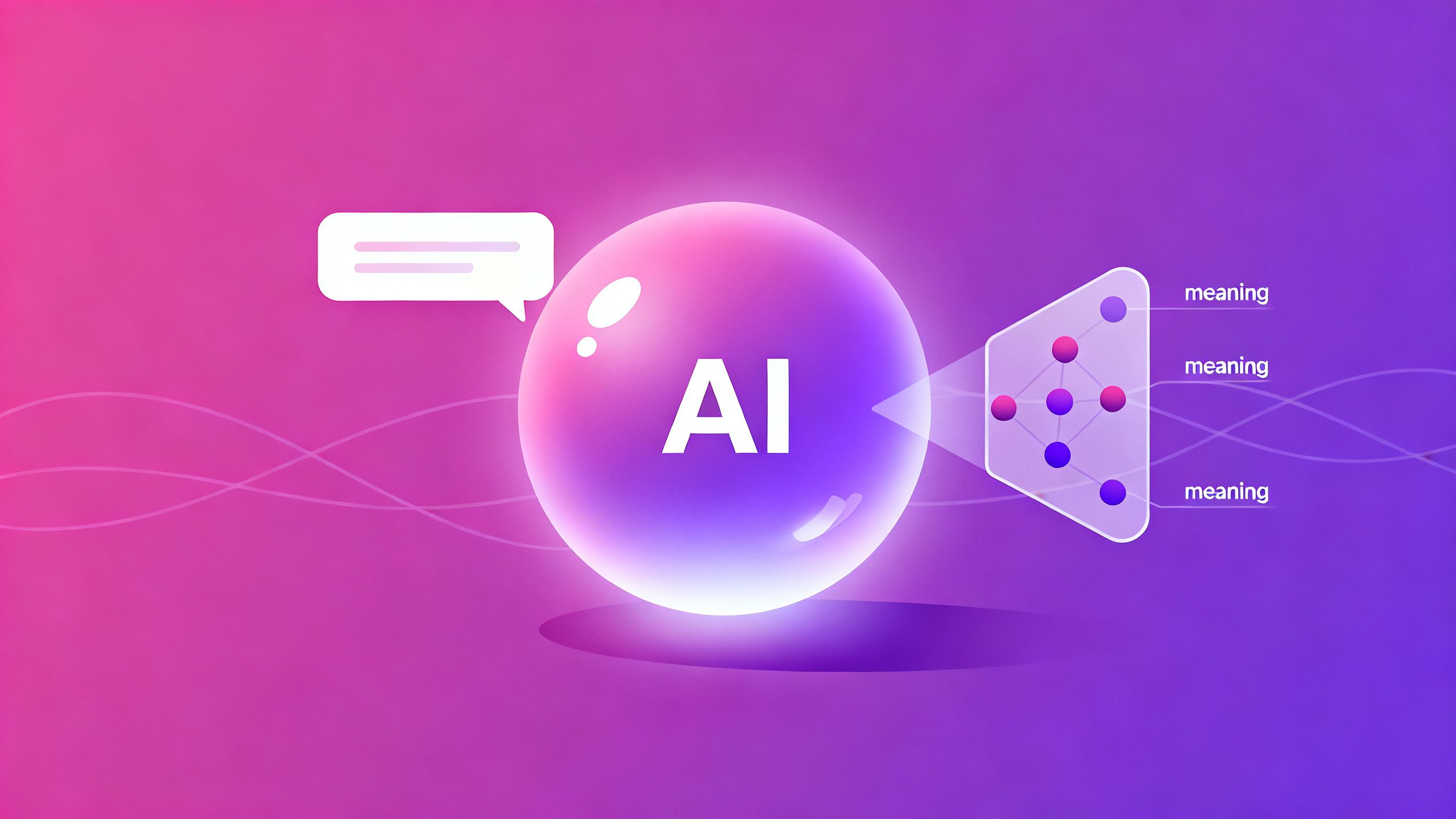
The old approach matched keywords: spot the word "refund," fire the refund script. That breaks the moment someone words things differently — or asks two things at once. Modern conversational AI instead works at the level of meaning:
Understanding meaning, not matching words, is the leap that made AI genuinely useful in support.
No message exists in a vacuum. "When will it get here?" is meaningless on its own — but paired with a customer's recent order, it's crystal clear. This is why context is the fuel for intent understanding. The more relevant history the AI can draw on, the more accurately it reads what's being asked.
Conversational AI leans on several layers of context:
This is exactly why conversational AI thrives on an omnichannel foundation. Connected to a unified inbox and a single view of the customer, the AI can pull context from any prior channel — making its read of intent sharper with every interaction. (See the bigger picture in What Is Omnichannel Customer Support?.)
Real customers don't write clean, single-purpose sentences. They pack multiple requests into one message, switch topics mid-thought, use slang, make typos, and lean on emotion. Good intent understanding is built to handle that mess:
Increasingly, understanding also stretches beyond text. Multimodal support means a customer can send a photo of a damaged product or a screenshot of an error, and the AI can factor what it sees into the intent — no restarting the conversation.
Here's the trait that separates trustworthy AI from reckless AI: it knows the limits of its own understanding. For every read of a customer's intent, a well-built assistant also has a sense of how sure it is — and it acts differently depending on that confidence.
A confident guess on a sensitive issue is worse than an honest handoff. This judgment is what makes intent understanding safe to deploy — and it's the foundation of a smooth human handoff, covered in depth in Conversational AI for Customer Service.
Understanding intent is only valuable if something useful follows. Once the AI has a confident read on what the customer wants, it can act on it — the leap from a chatbot that answers to an agentic AI that resolves. The typical flow looks like this:
Each step depends on the one before it, and every step gets better as the AI's grasp of intent improves. That's why intent understanding is the true engine of resolution — not just conversation. (See how this powers real workflows in customer support automation.)
Intent understanding is the quiet intelligence behind every good conversational AI experience. It's how an assistant moves past matching keywords to grasping the real goal behind a customer's words — using context to sharpen its read, handling the messiness of real language, knowing when it isn't sure, and turning understanding into action. The businesses seeing the most from AI customer service automation in 2026 aren't the ones with the flashiest bots; they're the ones whose AI genuinely understands — and knows when to hand off to a human. Feed it rich context through an omnichannel foundation, respect its confidence limits, and conversational AI stops guessing and starts truly helping.
Zoom out with What Is Omnichannel Customer Support? and Omnichannel vs Multichannel. Go deeper in Conversational AI for Customer Service, see it applied in WhatsApp Business Automation, and get the numbers in Omnichannel Statistics for 2026. Ready to build? Explore customer support automation and QuickTalk solutions.