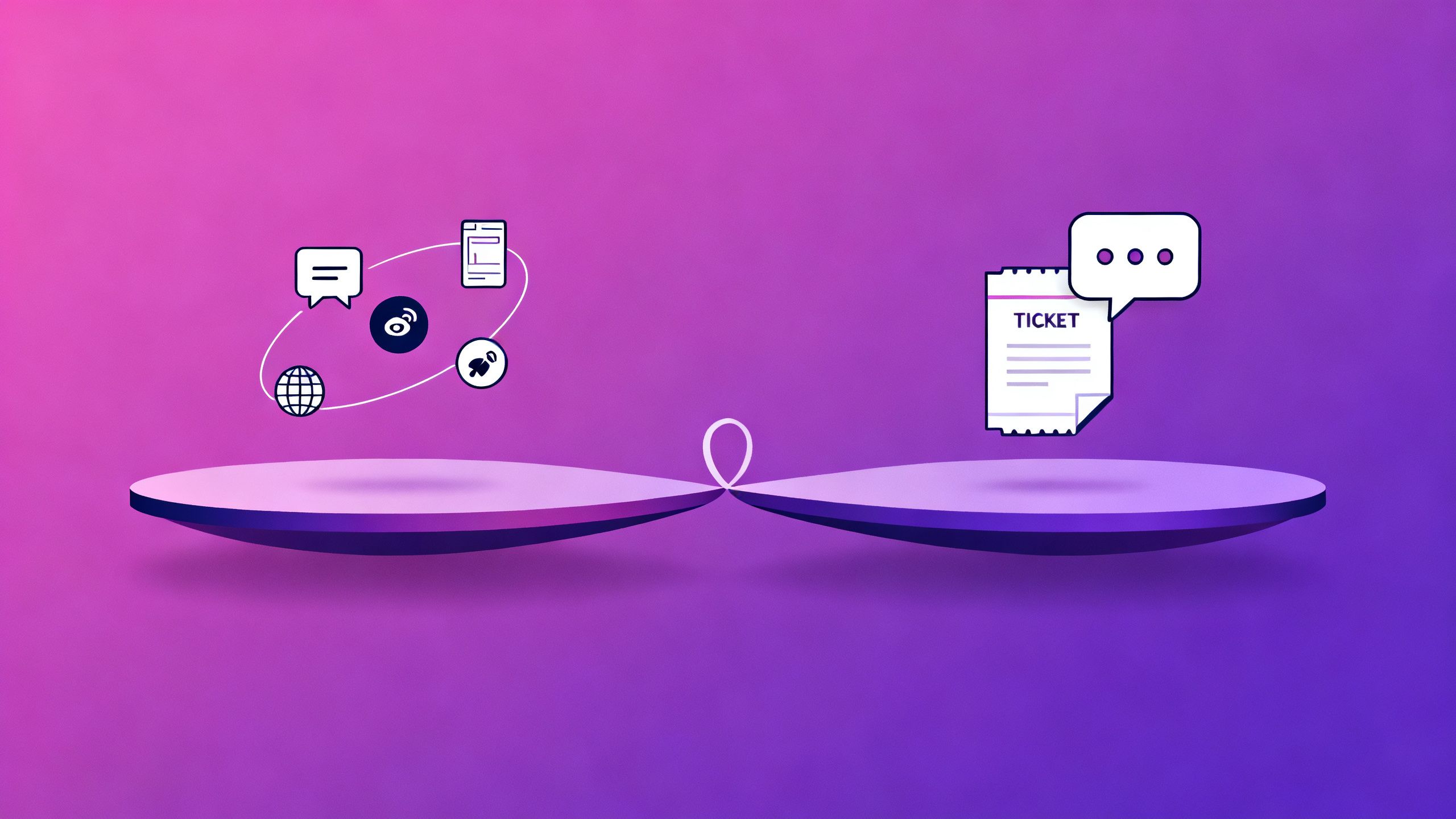
Zendesk built its reputation on the ticket — a structured, reliable way to track and resolve support requests, and for many teams it still does that job well. But customer expectations have moved from tickets to conversations. People now message businesses on WhatsApp, Instagram, and live chat, expect answers in seconds, and want conversational AI that resolves their issue on the spot rather than opening a case number. If you're weighing a Zendesk alternative in 2026, the deciding factor isn't features on a list — it's whether the platform is built for real-time, messaging-first, AI-driven support.
This post covers what to look for in a Zendesk alternative, the criteria that matter most in 2026, and where QuickTalk fits. No invented pricing or fake claims — just the capabilities that distinguish a modern omnichannel customer support platform from a traditional ticketing system.
Why teams look for a Zendesk alternative
Zendesk is a mature, capable platform, and teams explore alternatives for forward-looking reasons, not because ticketing is bad:
- Conversation over tickets. Customers want a continuous conversation, not a case that reopens from scratch each time.
- Native messaging reach. Teams increasingly need first-class WhatsApp Business automation and social messaging, not channels bolted onto a ticketing core.
- AI that resolves. The 2026 bar is agentic AI that takes real actions and hands off with full context — beyond suggested-article deflection.
- Multilingual by default. Global customer bases want automatic multilingual support built in.
- Simplicity. Smaller and mid-sized teams often want power without the configuration overhead.
This isn't a criticism of Zendesk — it reflects the shift from structured ticketing toward real-time, messaging-first support.
What to look for in a Zendesk alternative in 2026
Evaluate any option against how your customers actually reach you today. A modern platform should deliver:
- Conversation-first omnichannel — messaging apps, chat, social, and email in one continuous thread, with context that follows the customer. (See What Is Omnichannel Customer Support?.)
- Conversational AI that resolves — understanding intent and taking action, not just surfacing help-center links. (See Conversational AI for Customer Service.)
- Native WhatsApp automation — with open rates near 98% and 2B+ users, it's where customers already are. (See WhatsApp Business automation.)
- Multilingual support out of the box — every customer served in their own language, automatically.
- Seamless human handoff — escalations arriving with the full thread and history, no ticket ping-pong.
- A unified inbox that keeps every channel and handoff in one place.
Get these right and you're built for how customers communicate now, not how they did a decade ago.
How QuickTalk approaches these criteria
QuickTalk was designed as a conversation-first, messaging-and-AI platform, which shapes its strengths:
- Omnichannel by design. WhatsApp, chat, social, and email feed into one unified inbox and one ongoing conversation — so customers never repeat themselves and nothing gets orphaned.
- Conversational AI that takes action. Agentic AI resolves routine requests end to end and escalates the rest with full context — real resolution, not just deflection. Companies with strong omnichannel engagement retain about 89% of customers versus just 33% for fragmented setups.
- WhatsApp automation at the core. Bookings, reminders, order updates, and proactive outreach happen right in the app customers use — powering conversational commerce, a market projected to grow from about $14.5B to $39.5B by 2034.
- 50+ languages handled automatically, so a global customer base gets a first-class experience.
- Graceful human handoff, so agents step in already knowing the whole story.
Making the switch without disruption
Migrating from a ticketing system doesn't have to be a rip-and-replace ordeal:
- Start with your busiest channel — often WhatsApp or live chat — and make it genuinely great.
- Route your highest-volume questions to AI first, with clear escalation rules to humans.
- Bring channels into the unified inbox one at a time so context is never lost.
- Add proactive outreach and multilingual coverage once the core is stable.
- Track resolution rate, response time, and CSAT to prove the impact as you go.
The goal is a smooth transition from tickets to conversations — customers just notice that answers arrive faster.
Choosing a Zendesk alternative in 2026 comes down to one shift: from tickets to conversations. Zendesk remains a solid ticketing platform, but if your customers live on WhatsApp, expect instant answers, and span many languages, prioritize conversation-first omnichannel reach, conversational AI that takes action, native WhatsApp automation, and built-in multilingual support. QuickTalk was built around exactly those needs — a unified inbox, agentic AI, 50+ languages, and seamless human handoff at its foundation.